
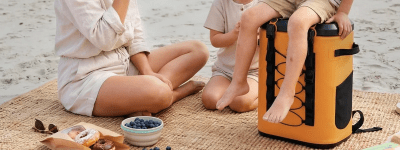
Soft Cooler vs Hard Cooler: Which Should You Buy?

Choosing between a soft cooler and a hard cooler is easier when you start with your trip, not the product label.
Think about four things first: how long you will be away, how far you need to carry your food and drinks, how many people you are packing for, and whether your cooler will stay in one place or move with you.
For short outdoor plans, beach days, fishing trips, kayaking, and weekend camping, a lighter and easier-to-carry option may be the better fit. For longer basecamp trips where you need large capacity and extended cold storage, a rigid ice chest may make more sense.
Start With Your Trip
There is no single best cooler for every outdoor plan. The right choice depends on how you use it.
| Your Plan | What Matters Most | A Good Fit |
|---|---|---|
| Beach day or picnic | Easy carrying, compact storage, room for drinks | A flexible, carry-friendly cooler |
| Kayaking or boating | Hands-free carry, water-resistant materials, easy cleaning | A backpack-style or portable cooler |
| Day fishing trip | Cold drinks, snacks, durable outer materials | A portable cooler with comfortable straps |
| Weekend camping | Enough room for food and ice, dependable insulation | A larger portable cooler or compact hard cooler |
| Four or more nights at camp | Larger capacity and longer ice retention | A rigid ice chest |
| Tailgating or car camping | High capacity, the cooler stays near the vehicle | A hard cooler or larger portable cooler |
Before buying, ask yourself: Will I be carrying this from the car to the water, trail, or campsite? Or will it stay next to the vehicle for most of the trip?
That answer often matters more than the cooler’s shape.
Carry Distance: Moving Often or Staying Put?
If you need to carry a cooler beyond the parking lot, weight and comfort matter quickly.
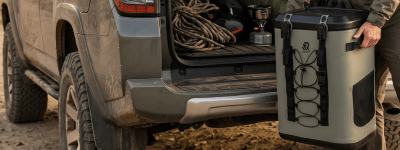
A soft-sided design is usually easier to manage for beach walks, dock access, fishing spots, and campsites that are not directly beside your vehicle. Backpack straps, chest straps, and side handles can make it easier to move food and drinks without tying up both hands.
A hard cooler works well when it mostly stays in one location. Its rigid shape can be useful at a campsite, beside a truck, or at a tailgate, but a larger model can become awkward once filled with ice and drinks.
Choose a carry-friendly design when you expect to move frequently. Choose a rigid ice chest when cold storage time and stationary use matter more than portability.
Trip Length and Ice Needs
Ice retention depends on more than the cooler type. Outdoor temperature, direct sun, ice quantity, pre-chilled food, and how often you open the lid all affect how long items stay cold.
For a day trip or one-night outing, you may only need enough cold storage for drinks, lunch, and snacks. A compact insulated option can be easier to carry and store after the trip.
For a Friday-to-Sunday camping trip, look for a design with reliable insulation and enough capacity for food, drinks, and ice. If you are camping for several days without access to fresh ice, a larger hard cooler may be the more practical choice.
Make Ice Last Longer
- Chill food and drinks before packing.
- Pre-cool the interior before your trip when possible.
- Use enough ice or ice packs to fill open space.
- Keep the cooler out of direct sunlight.
- Open it only when needed.
- Pack frequently used items near the top.
The goal is not simply to choose the cooler with the longest advertised ice retention. It is to choose one that can keep your food and drinks cold for the way you actually travel.
Capacity: Pack for Your Group
Capacity should match the number of people, the length of your trip, and what you plan to bring.
For one or two people on a day trip, a smaller setup can hold drinks, sandwiches, fruit, snacks, and ice packs without becoming too heavy.
For a couple or small group spending a full weekend outdoors, plan for more space. You may need room for breakfast items, meals, drinks, ice, and snacks for more than one day.
For a larger group or a multi-day basecamp, a hard cooler with more room may be the better choice. It can carry more supplies and stay in one place while everyone accesses it throughout the trip.
A simple rule: do not fill every inch with food and drinks. Leave enough room for ice so the cooler can work effectively.
Storage and Vehicle Space
Hard coolers are sturdy, but their fixed shape takes up the same amount of room whether they are full or empty. This can be inconvenient in a packed trunk, small SUV, or garage.
A flexible cooler can fit more easily beside luggage, behind a seat, or in an awkward cargo space. Some designs can also be stored more compactly after a trip.
This makes a difference for people who take frequent day trips, live in smaller spaces, or want a cooler that does not take over the garage between weekends.
If your cooler will spend most of its time in a vehicle, garage, or fixed campsite, storage size may not be a concern. If you need to pack around it, carry it, and put it away often, flexibility becomes more valuable.
Water Activities and Beach Days
Kayaking, boating, paddleboarding, fishing, and beach trips add a few extra requirements.
Look for materials that are easy to clean after contact with sand, water, mud, or fish residue. A durable coated outer shell can also be useful around saltwater and strong sun.
For active water days, consider these features:
- Waterproof protection
- Comfortable shoulder straps or backpack carry
- A secure closure
- Easy-to-clean interior materials
- Water-resistant outer construction
- Side pockets for smaller essentials
- Exterior attachment points for accessories
- A shape that is easy to move around a dock, shoreline, or campsite
For these activities, a portable setup is often more practical than a large rigid box. You can carry it from the car to the shore, keep it nearby during the day, and pack it away without needing extra space.
Which Cooler Setup Fits Your Plan?
Choose a Carry-Friendly Cooler If You:
- Take beach trips, picnics, or day outings.
- Need to walk from the car to the water, trail, or campsite.
- Want hands-free or easier one-person carrying.
- Pack for one to four people.
- Need cold storage for a day or a weekend.
- Have limited trunk or garage space.
- Enjoy kayaking, boating, fishing, or other active outdoor plans.
Choose a Hard Cooler If You:
- Camp for several days without easy access to ice.
- Need high capacity for a large group.
- Usually keep the cooler in one place.
- Travel by vehicle and do not need to carry it far.
- Need a more rigid container for a basecamp setup.
- Prioritize extended cold storage over portability.
RIVONOVA Options for Active Outdoor Plans
RIVONOVA designs outdoor gear for people who want to carry less hassle into their day outside.
For Day Trips and Hands-Free Carrying
The Roll-Top Backpack Cooler is designed for beach days, fishing, boating, picnics, and other active outings. Its roll-top opening gives you quick access without a traditional zipper, while adjustable shoulder, chest, and waist straps help support the load on longer walks.
The 20L size works well for lighter day trips. The 35L size offers more room for shared food, drinks, and ice when your plans last longer.

For Weekend Camping and Group Outings
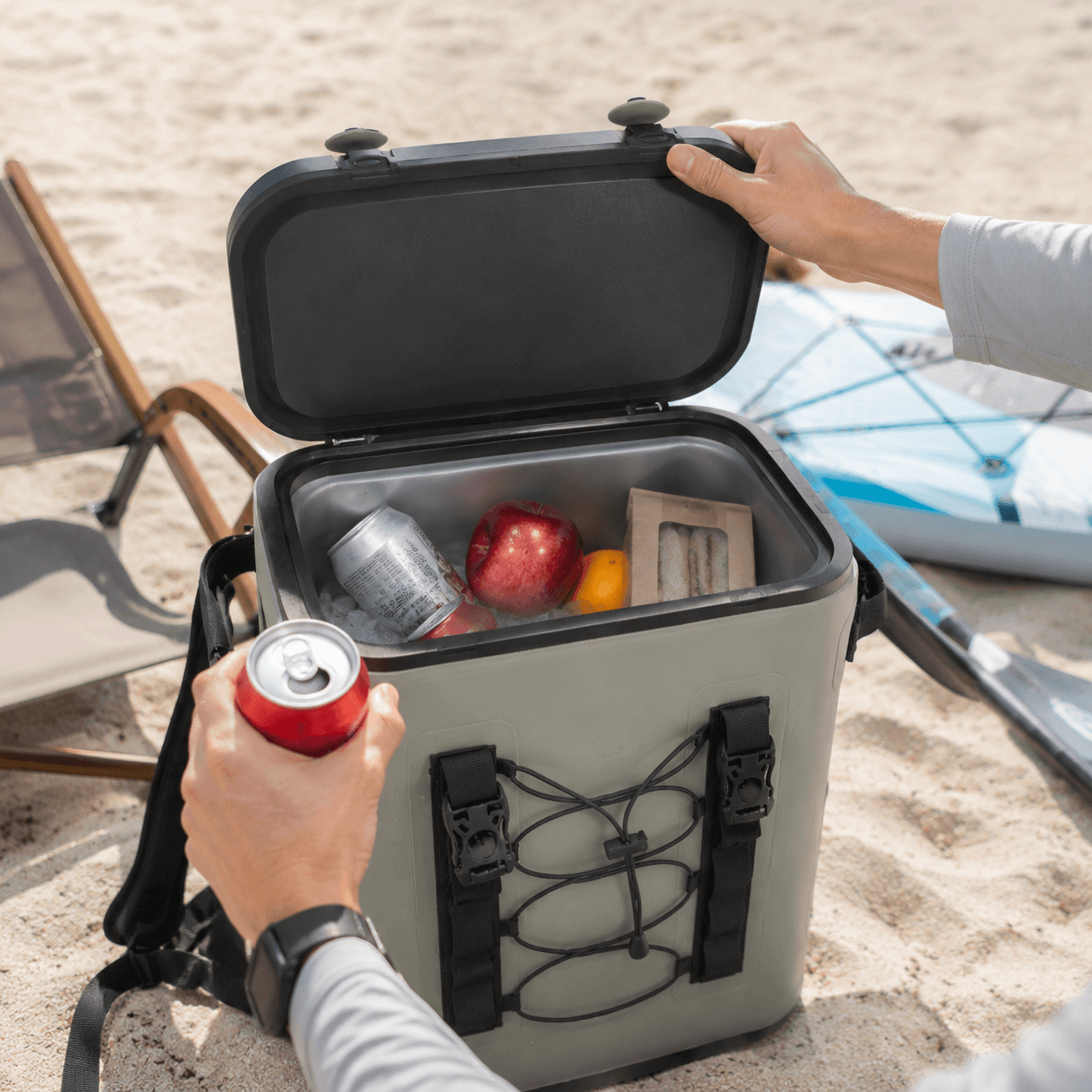
The Magnetic Soft Cooler 24Can is built for longer outdoor plans where you need more capacity and easier access. Its magnetic opening allows for quick one-handed use, while the rigid lid can serve as a small surface for food prep or setting down drinks.
This option is a practical fit for weekend camping, boating, tailgating, and small-group beach days. It combines backpack straps with side handles, so you can choose the carry method that works best for the moment.

For Browsing Cold-Storage Options
If you are comparing sizes, carrying styles, and features for upcoming outdoor plans, explore RIVONOVA gear designed to keep food and drinks cold during active days outside.
Hard Cooler vs Soft Cooler: Quick Comparison
| Feature | Hard-Sided Cooler | Soft-Sided Cooler (RIVONOVA) |
|---|---|---|
| Ice retention | 5–7 days | 24–48 hours |
| Weight (empty) | 10–25 lbs | 2–6.6 lbs |
| Portability | Heavy, boxy, hard to carry solo | Lightweight, backpack straps, one-person carry |
| Capacity range | 20–80+ quarts | 20L–35L (24–36 cans) |
| Durability | Impact-resistant rotomolded shell | Tear-resistant TPU-coated fabric, UV & saltwater-proof |
| Waterproofing | Sealed but not submersible | IPX6 rated, fully welded seams, floats |
| Cleaning | Hose down, drain plug | Wipe interior, liner turns inside out |
| Storage when empty | Takes up fixed trunk/garage space | Rolls flat or collapses for compact storage |
| Price tier | $200–$500+ | Under $299 |
| Best for | Week-long camping, fishing tournaments, tailgating | Day trips, beach, kayaking, weekend camping, boating |
Frequently Asked Questions
1. Is a flexible cooler or a rigid ice chest better for weekend camping?
It depends on your setup. A flexible, insulated option is often easier to carry and store for one to three nights. A hard cooler may be a better fit for longer trips, larger groups, or campsites where the cooler stays in one location.
2. What type of cooler is easiest to carry to the beach?
A portable design with backpack straps or comfortable shoulder support is usually easiest for beach use. It keeps your hands available for chairs, towels, umbrellas, or other gear.
3. How much ice do I need for a two-day camping trip?
The amount depends on the cooler size, outdoor temperature, and what you pack. Use enough ice or ice packs to surround chilled food and drinks, while leaving only a small amount of empty space inside.
4. Should I bring one large cooler or two smaller ones for camping?
Two smaller coolers can be useful if you want to separate drinks from food. This may help reduce how often the food cooler is opened. One larger cooler may be simpler when space and carrying are not concerns.
5. What works best for kayaking or boating?
Choose a portable setup that is easy to carry, easy to clean, and suited for wet conditions. Secure closures, durable outer materials, and a comfortable carry system are especially useful around water.
6. How can I keep food and drinks cold longer outdoors?
Pre-chill everything before packing, use plenty of ice, keep the cooler in the shade, and limit how often you open it. These habits can improve cold-storage performance no matter which style you choose.
Choose for the Way You Travel
The best cooler is the one that fits your actual outdoor routine.
Choose a portable, easy-to-carry design when your trip involves walking, water activities, compact packing, or a short camping weekend. Choose a hard cooler when you need more room, longer ice retention, and a cooler that can stay at a fixed basecamp.
Start with your trip length, carry distance, group size, and storage needs. Once those are clear, choosing the right setup becomes much simpler.


Written by RivonovaOutdoors

Leave a comment
This site is protected by hCaptcha and the hCaptcha Privacy Policy and Terms of Service apply.