
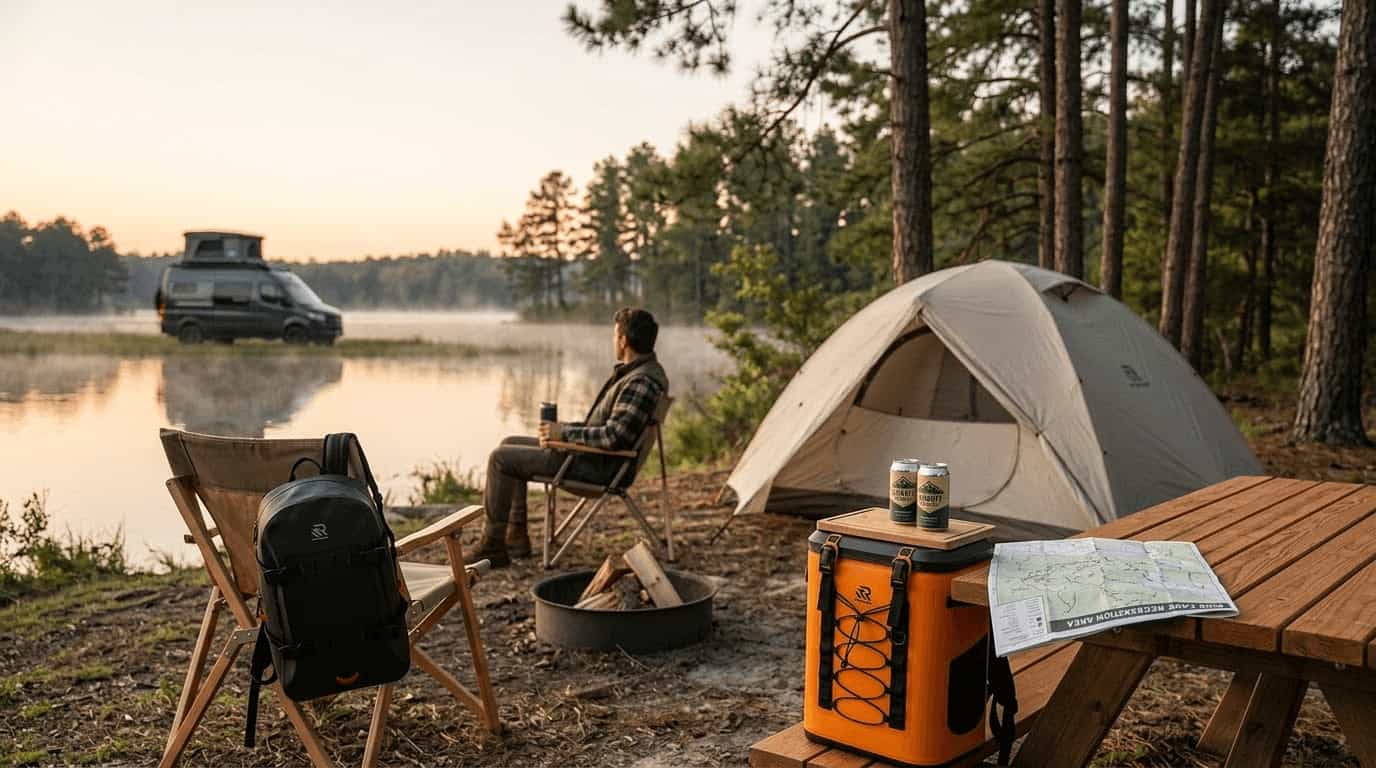
The Weekend Camping Checklist: From Packing at Home to Cleaning Up After Camp
A good camping weekend rarely feels effortless by accident.
The best trips usually come down to a few practical details: knowing where your gear is, keeping food cold without digging through a mess of ice, staying prepared when the weather changes, and not coming home to a car full of wet, muddy equipment.
You do not need to pack like a professional camper to make the experience easier. You just need a simple system that works from the moment you start loading the car to the moment everything is clean and put away again.
This guide walks through a typical camping weekend—from packing at home to setting up camp, managing food and gear outdoors, and getting everything ready for the next trip.
Before You Leave: Pack by What Needs Protection

The easiest way to make camping less chaotic is to avoid treating every item the same.
Some gear needs to stay dry. Some needs to stay cold. Some will get dirty, wet, or covered in campfire smoke. Separating those categories before you leave makes the rest of the weekend much easier.
Start with three simple groups:
-
Dry essentials: phone, keys, wallet, camera, dry clothing, chargers, first-aid items, and an extra layer
-
Cold food and drinks: ice, water, meals, snacks, produce, and anything that needs to stay chilled
-
Outdoor-use gear: towels, camp shoes, rain layers, cooking tools, firewood gloves, and anything likely to get wet or dirty
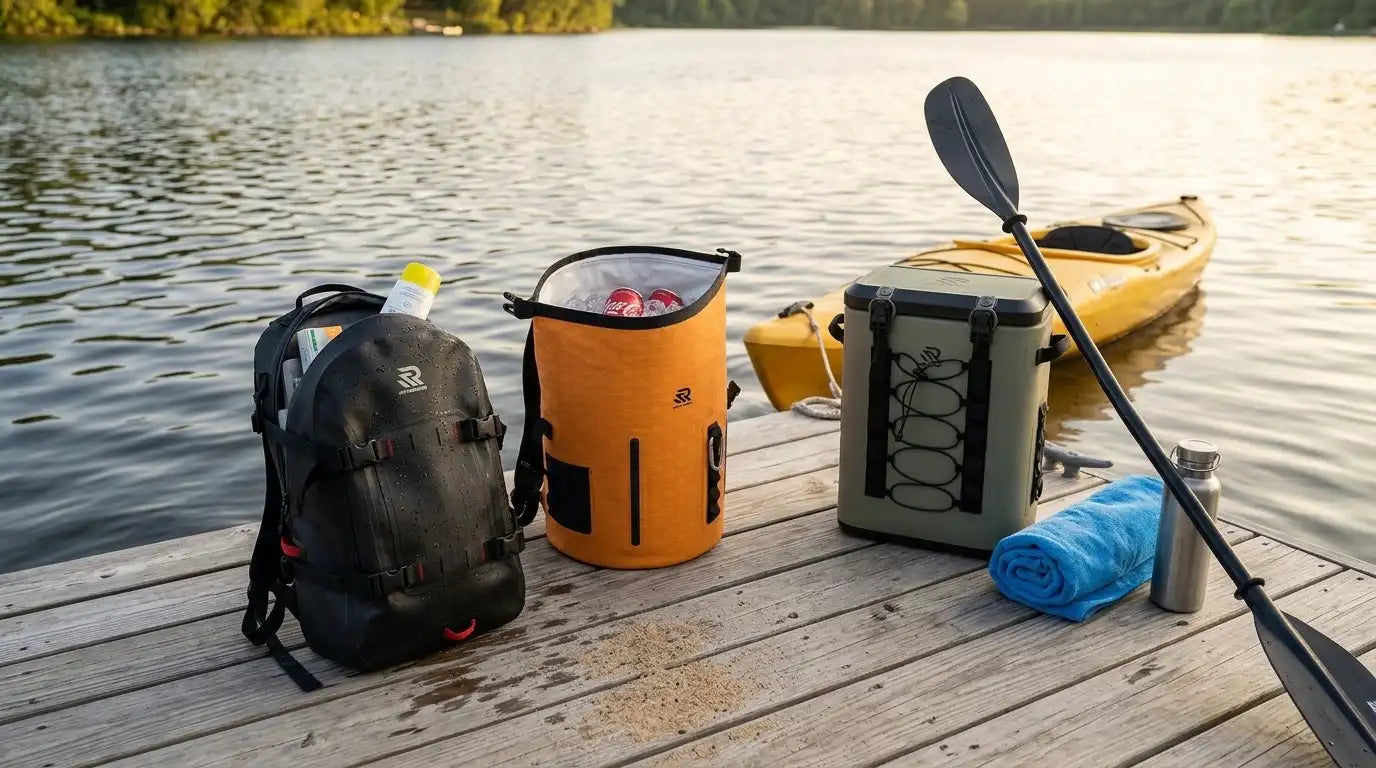
The RIVONOVA Waterproof Backpack 30L is useful for the first group. With IPX7 waterproof protection, an airtight zipper, and sealed construction, it helps keep valuable items dry around rain, wet grass, creek crossings, and unexpected spills. Its air valve can also help it float if it lands in the water, which adds reassurance around lakes, boats, and waterside campsites.
Pack the items you may need quickly near the top: phone, keys, headlamp, wallet, and a light jacket. Keep dry clothes and heavier items closer to your back so the pack stays balanced when you carry it from the parking area to your campsite.
Keep Camp Food Organized Before the Ice Goes In
A cooler works better when it is packed with a plan.
Instead of putting drinks, meals, loose snacks, and ice into one mixed space, organize the contents based on when you will need them. Put dinner ingredients and food for the second day lower in the cooler. Keep water, drinks, breakfast items, and quick snacks closer to the top.
For a weekend at a campground, the RIVONOVA Roll-Top Backpack Cooler is a practical choice when you want flexible, hands-free cold storage. Its zipper-free roll-top closure avoids the zipper tracks that can collect dirt, pine needles, sand, and grit around camp. The IPX6 waterproof rating also helps it handle rain, wet ground, and water spray around the campsite.
A simple packing order can help keep cold air where it belongs:
-
Place ice packs or block ice along the bottom and sides
-
Put frozen or pre-chilled meals toward the center
-
Keep drinks and frequently used snacks close to the top
-
Use sealed containers to separate produce, meat, and loose snacks
If the cooler has a removable liner, cleaning up after a spill becomes much easier. You can take it out, rinse it, let it dry, and prepare it for your next trip without scrubbing around every corner.
At Camp: Make Drinks and Snacks Easy to Reach
Once you arrive, most of the best camping moments happen between activities.
Someone wants a cold drink while setting up the tent. Kids need snacks after a hike. You need water while cooking dinner. The less time you spend digging through a cooler, the more relaxed camp feels.
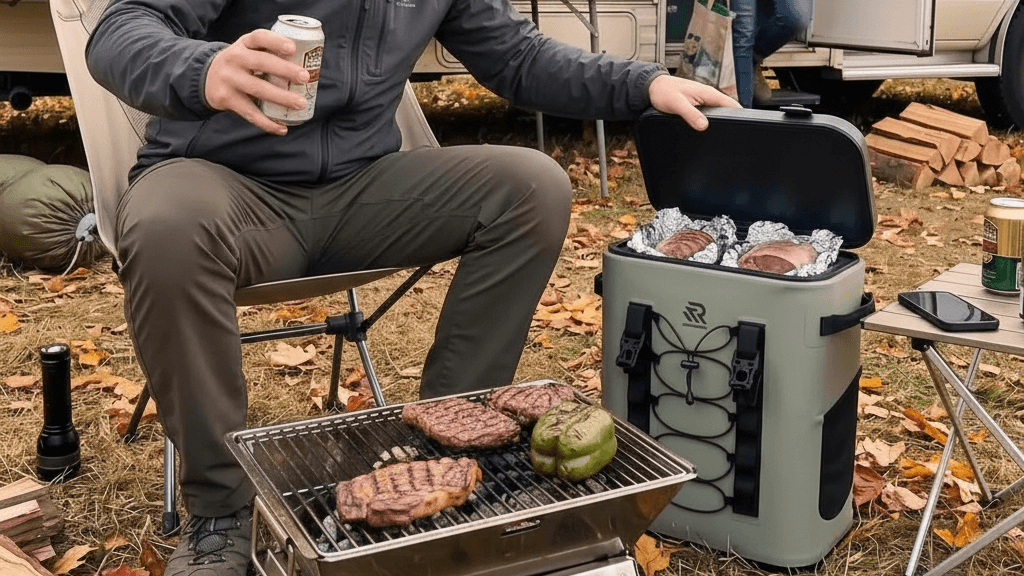
The RIVONOVA Magnetic Soft Cooler 24Can is designed for frequent access. Its zipper-free magnetic opening lets you reach in with one hand, while dual buckle straps provide added security when you carry it around camp or load it into the car.
The TempArmor™ insulation system provides up to 48 hours of ice retention, helping keep drinks and food cold through a full camping weekend. Its 840D TPU shell is designed for outdoor conditions such as sun exposure, dirt, rough ground, and damp weather.
For a cleaner camp setup, place the cooler in a shaded spot and keep the items you reach for most often close to the top. The hard top lid can also work as a small surface for drinks, snacks, or cooking tools when a picnic table is crowded.
At the end of the day, close the magnetic lid securely and keep the cooler upright. This helps protect the interior and makes the next morning’s breakfast and coffee routine easier.
Set Up a Camp That Can Handle Weather Changes
Weather can change quickly at a campsite.
A sunny afternoon can turn into rain by dinner. Morning dew can soak the grass. Wind can blow dust, leaves, and ash into anything left open. You do not need to control every condition, but you can keep the essentials from becoming a problem.
Keep your waterproof backpack off the ground whenever possible. Hang it from a tent loop, place it on a camp chair, or set it on a clean groundsheet. This helps protect the base from mud and standing water while keeping important items easy to find.
Use the cooler’s backpack straps and side handles when moving between your vehicle, campsite, and nearby trail or lake. Instead of making multiple trips while carrying awkward gear, you can keep your hands more free for tents, chairs, firewood, or a child’s hand.
A small routine also helps at camp:
-
Keep electronics, dry clothes, and backup layers inside the waterproof backpack
-
Keep food and drinks in the cooler, away from direct sun
-
Use one small bag for trash and food wrappers
-
Place wet shoes, towels, and rain layers in a separate area
-
Check closures before leaving camp for a hike or heading to sleep
The goal is not a perfect campsite. It is a campsite where you can find what you need without turning every activity into a search.
When the Fire Is Out: Reset Before Heading Home
Packing up camp is usually when everything gets mixed together.
Towels are damp, shoes are muddy, there are food containers to sort, and the cooler is full of melting ice. Taking a few minutes to separate things before they go into the car makes the trip home—and the cleanup afterward—much easier.
Start with food. Throw away trash, pack leftovers safely, and drain excess water from the cooler when appropriate. Keep any remaining food sealed and cold for the drive home.
Next, separate wet or dirty gear from dry gear. Do not put damp towels, muddy shoes, or wet rain jackets back inside your waterproof backpack. Use a mesh bag, washable tote, or dedicated wet-gear bag instead.
Before leaving the campsite, check that your keys, wallet, phone, and other essentials are back in the waterproof backpack. Then give shoes, mats, and towels a quick shake to remove loose dirt before loading the vehicle.
These small habits help keep your car from becoming the final campsite mess.
Back Home: Clean, Dry, and Store Gear for Next Time
After a camping weekend, it is tempting to leave everything in the car until later. But the fastest cleanup is usually the one you do before dirt dries, ice water sits too long, and damp fabric starts to smell.
Start by opening up all bags and coolers.
The waterproof backpack should be emptied, wiped down, and left open to air out—especially if it held damp clothes, snacks, or gear that smells like smoke. Rinse off mud or dust with fresh water, then let the main compartment, back panel, and straps dry in a shaded, ventilated area.
For the Roll-Top Backpack Cooler, drain any remaining ice water, wipe the interior, and flip-out the liner for a more thorough rinse if needed. Leave the roll-top fully unrolled until the cooler is completely dry.
For the Magnetic Soft Cooler, empty the contents, wipe the food-grade liner with fresh water and a soft cloth, check the magnetic opening for dirt or crumbs, and leave the lid open to air dry. The 840D TPU exterior can be wiped down after exposure to dust, mud, or campground ash.
Avoid storing any bag or cooler while it is still damp. Keep gear in a cool, dry place away from direct sun, heat sources, sharp objects, fuel, and strong chemicals.
Make the Next Camping Weekend Easier
A smooth camping trip is not about owning more gear. It is about using the gear you have in a way that makes outdoor time feel less complicated.
Keep dry essentials protected. Keep food cold and easy to reach. Give wet and dirty gear its own space. And when the weekend ends, take a few minutes to reset before putting everything away.
With a waterproof backpack for the things that must stay dry, a roll-top cooler for wet camp conditions, and a magnetic cooler for fast access to food and drinks, you can spend less time managing gear and more time enjoying camp.
The best part of camping is the time outside. A simple system helps you keep it that way.

Written by RivonovaOutdoors

Leave a comment
This site is protected by hCaptcha and the hCaptcha Privacy Policy and Terms of Service apply.